
Surat Shabd Yoga vs Transcendental Meditation
Both are genuine practices with real lineages and real results. Understanding how they differ helps clarify what each is offering.
Transcendental Meditation is a mantra-based practice in which the practitioner uses a specific, personally assigned mantra to settle the mind into increasingly refined states of awareness. The technique is systematic, the instruction is standardized, and the results — including documented physiological benefits — are well established. For many people, TM provides their first genuine experience of inner quiet and a recognizable shift in the quality of their mental life.
From the perspective of Surat Shabd Yoga, TM is primarily a Dharna practice — a highly refined and effective method of settling the mind. What it does well, it does very well. What it does not address is the movement of the Surat toward consciousness and then toward the Sound Current. The mantra creates conditions; it does not itself constitute the union.
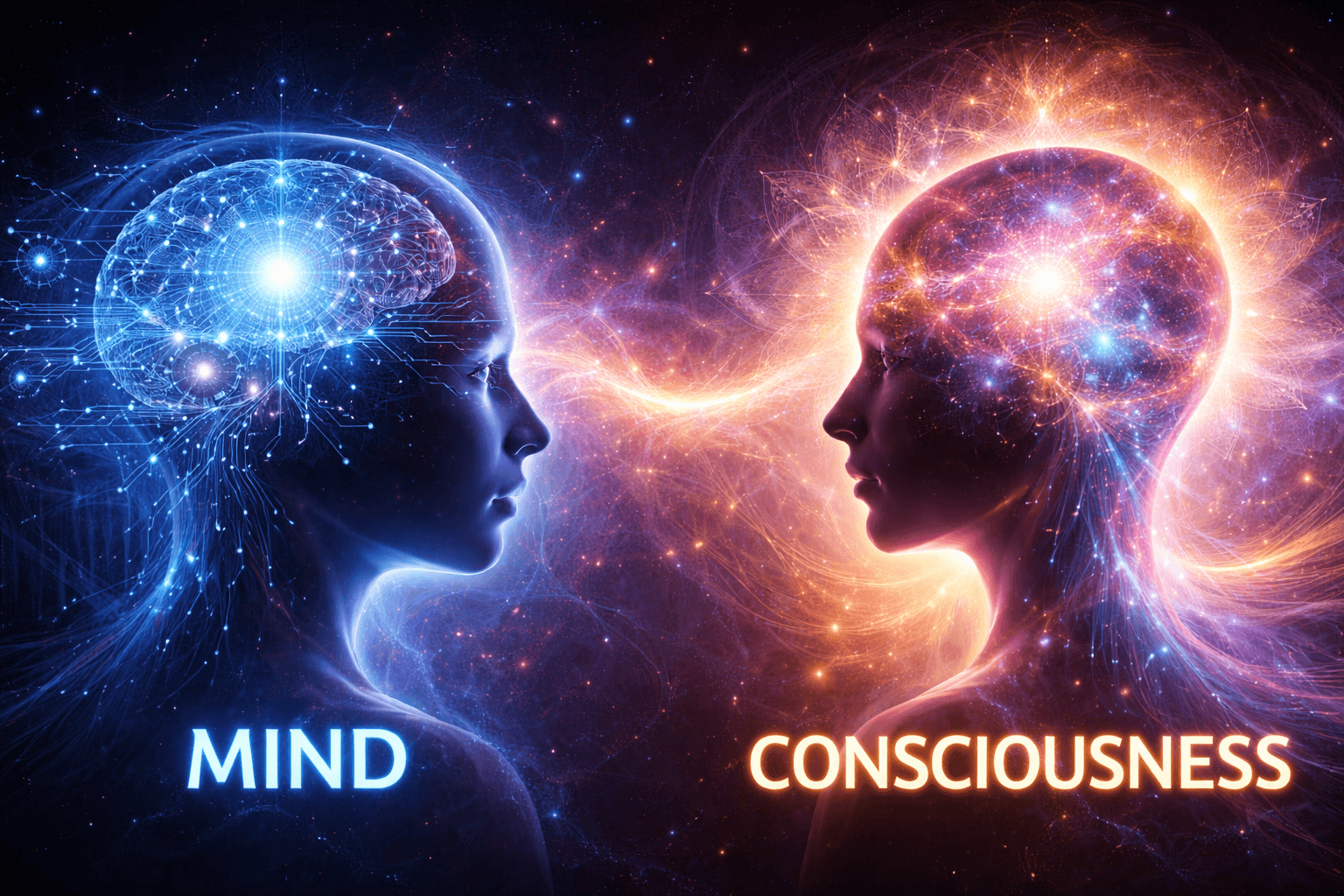
Surat Shabd Yoga is a complete path rather than a single technique. It encompasses the preparation of the nervous system, the training of attention, sensory withdrawal, the contact and development of consciousness, and ultimately the connection with and merging into the Sound Current. It understands meditation as the union of the mind with consciousness at the third eye, and the union of consciousness with the Shabd — not as a state of refined mental quiet.
The two paths are not incompatible. Someone who has developed genuine attentional capacity and inner stillness through TM has built something real that transfers. What Surat Shabd Yoga offers is the complete destination, not just a better resting place on the way.